Choose a place that does not press controls
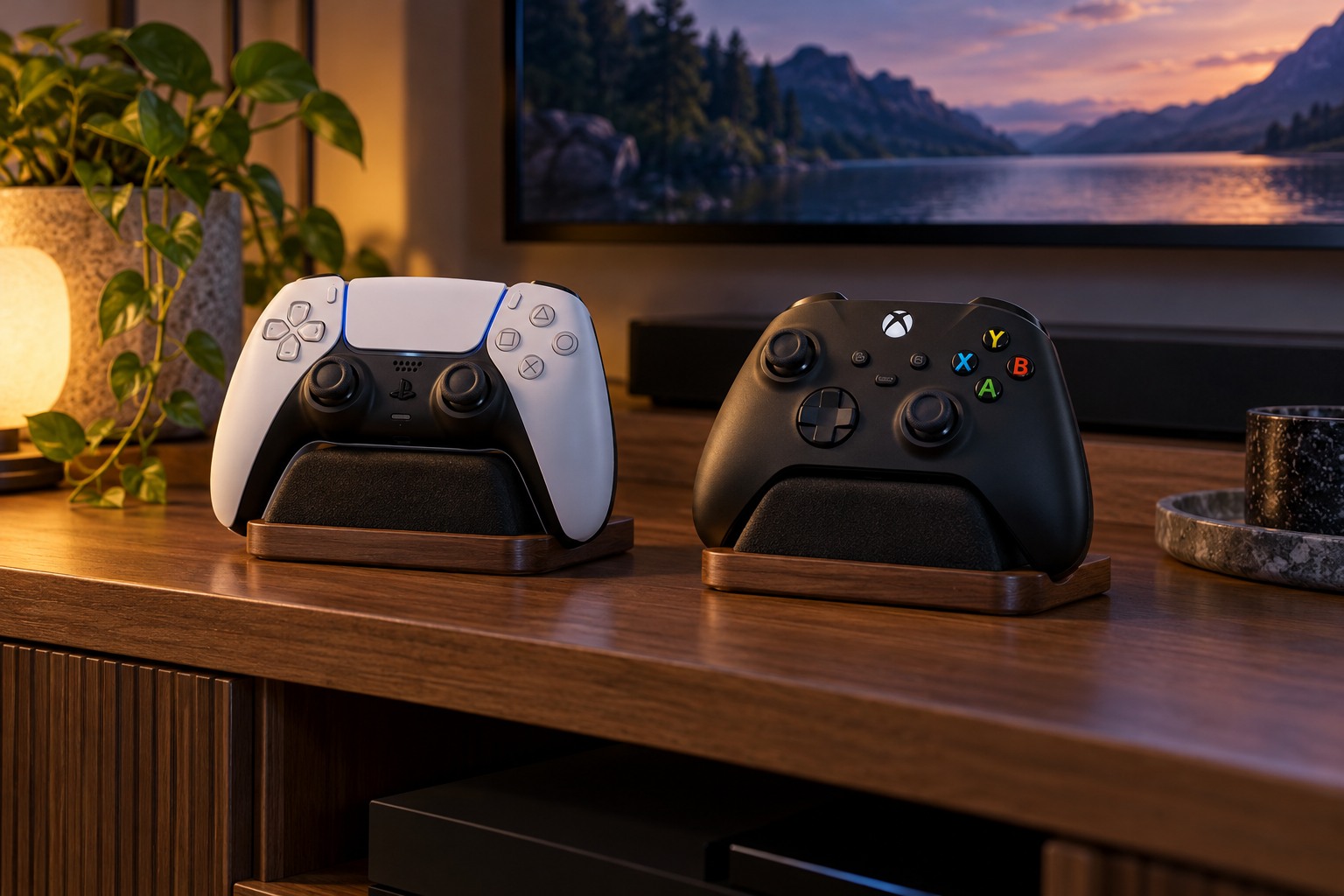
Set the controller where its sticks and triggers are not held against other objects. A crowded drawer can keep an input under pressure even when the controller looks protected from dust. Use a suitable compartment or stand that supports the body, and leave enough space to lift it without catching a cable or neighboring accessory.
Keep the device away from drinks, direct heat and locations where it can fall from a cable tug. A desk edge is convenient until a headset lead pulls across it. For a household with several controllers, give each a recognizable place so one is not routinely buried beneath game cases. A simple shelf arrangement can be sufficient without buying a dedicated display stand.
Treat charging as a separate function
If using a charging dock, confirm the exact controller or battery-pack compatibility and follow its alignment instructions. A controller resting on a stand is not necessarily making electrical contact. Check the supported charge indicator rather than assuming that an illuminated base proves the battery is charging. Keep contacts clean only by the method specified by the manufacturer.
For a cable connection, leave slack so the plug is not supporting the controller's weight. Avoid sharp bends at the socket or trapping the lead beneath the device. Use the recommended charging arrangement and follow battery-storage guidance for a longer period without use. Do not assume all controllers use the same battery chemistry or accept interchangeable rechargeable packs.
Make the next session predictable
Before putting the controller away, use its normal power-off procedure where appropriate and place removable accessories with it. Keep a wireless receiver or proprietary adapter in a labeled compartment rather than loose in a general cable box. If the controller is paired with several devices, a small note can help another user reconnect it to the intended system.
Inspect the storage spot after ordinary use. If the controller is regularly knocked, the cable becomes tangled or the dock is difficult to align, change the placement. For travel, use a suitable protective case instead of assuming the home stand offers transport protection. The best storage routine is easy enough to follow every time and leaves the controller ready without stressed controls or missing parts.