Listen to the whole board
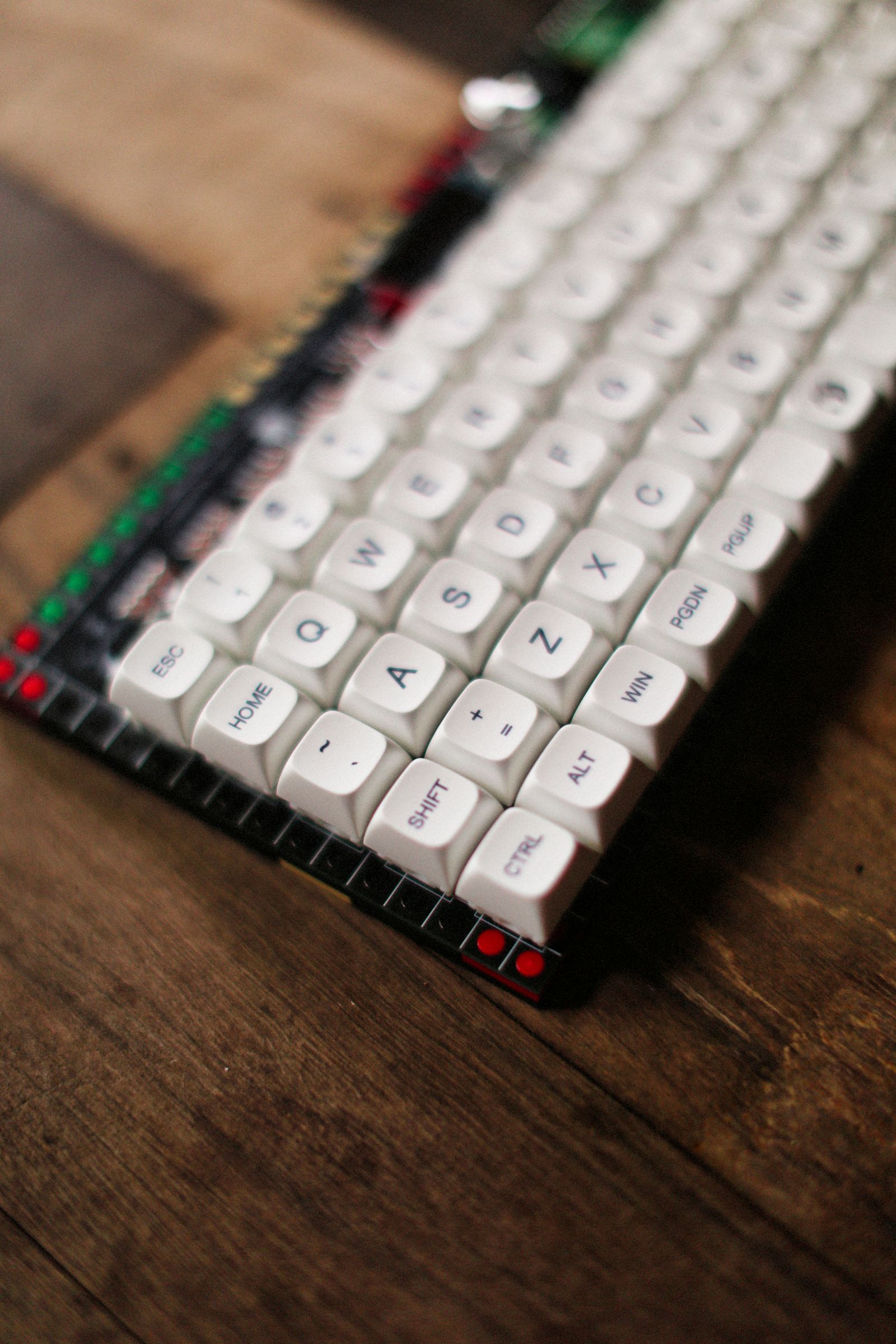
A keyboard produces sound when keys move, when they reach the end of their travel and when they return. Long stabilized keys can sound different from letters. A board advertised with quiet switches may still have a noticeable spacebar or a case that resonates on the desk. Try the actual model when possible rather than judging only a switch sample.
Recordings can show broad differences, but microphone placement and processing change what you hear. Compare several keys and ordinary typing instead of a carefully isolated single press. If someone else shares the room, their position matters: the sound beside the desk may differ from what reaches a microphone or a nearby bed.
Match the purchase to the room's use
Decide when the keyboard will be used and what else happens in the room. A board acceptable during daytime conversation may be intrusive during a quiet evening. Describe that situation when comparing candidates. It is more useful than asking whether a product is silent without specifying the environment.
Avoid assuming that every non-clicky switch is quiet. Linear and tactile switches can still produce impact noise. Products specifically designed with damped switches may reduce some sounds, but their feel can differ. Test whether the keys remain comfortable for the way you type and play.
The surface beneath the board also matters to the overall impression. A stable mat can change how contact noise reaches the desk, but it will not remove the switch's own sound. Check that adding a mat does not make the keyboard uneven or consume the mouse area you need.
Do not rely on software to solve room noise
Microphone noise suppression may reduce what teammates hear, yet it does nothing for another person sitting nearby. Treat voice-chat processing and shared-room sound as separate problems. A microphone close to your voice may help the call, while a quieter keyboard or a different room arrangement addresses the physical sound.
Before modifying a keyboard, check what its manufacturer supports. Adding random material inside the case or applying lubricant without understanding the mechanism can create faults. A returnable board with the desired sound and feel may be a simpler choice than buying one that requires a complicated modification plan.
During the evaluation period, use the board at the normal time of day and ask for feedback from the actual shared space. Keep the comparison specific: which keys are noticeable, from where, and during which task. That makes the decision about the room rather than a vague ranking of switch colors.