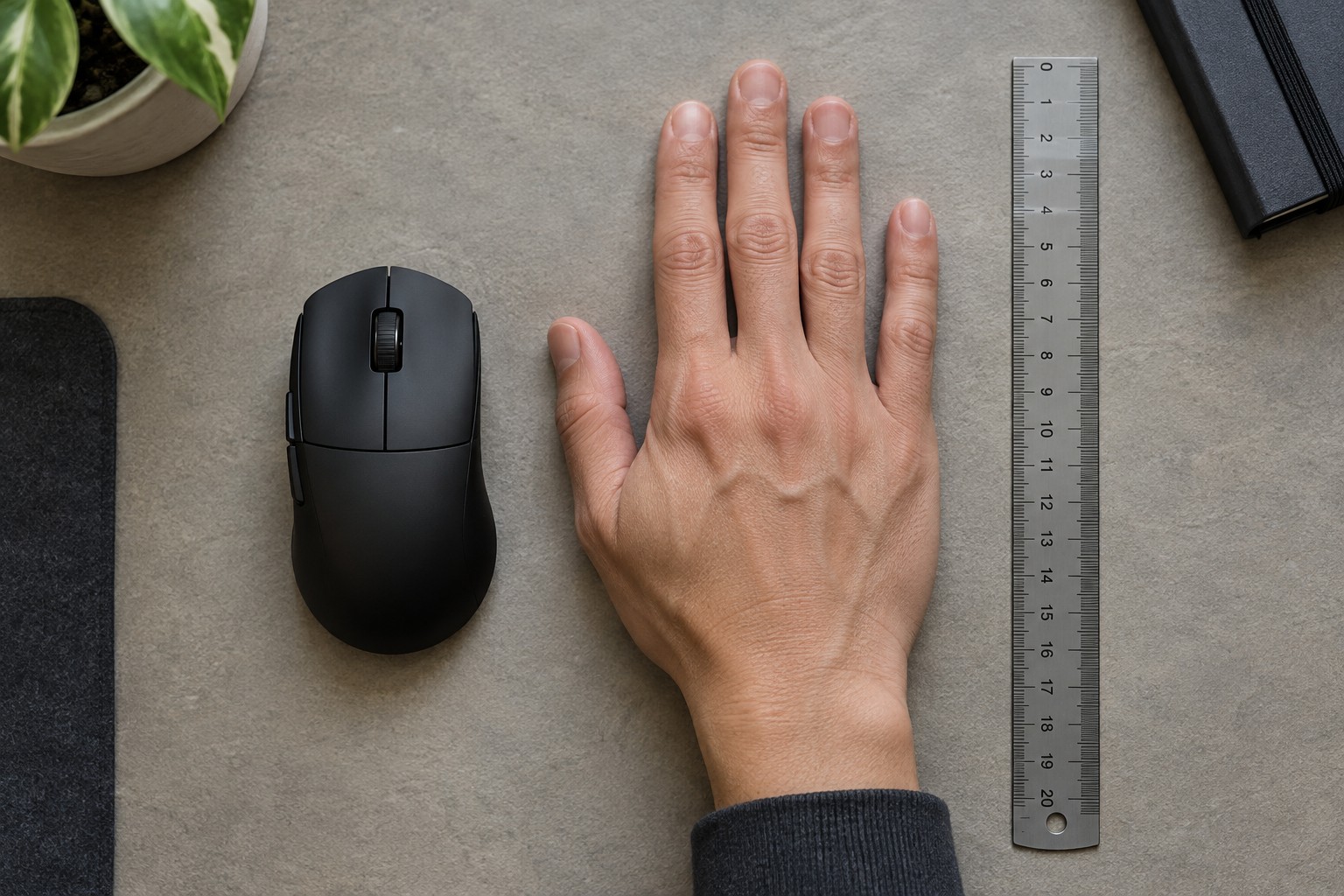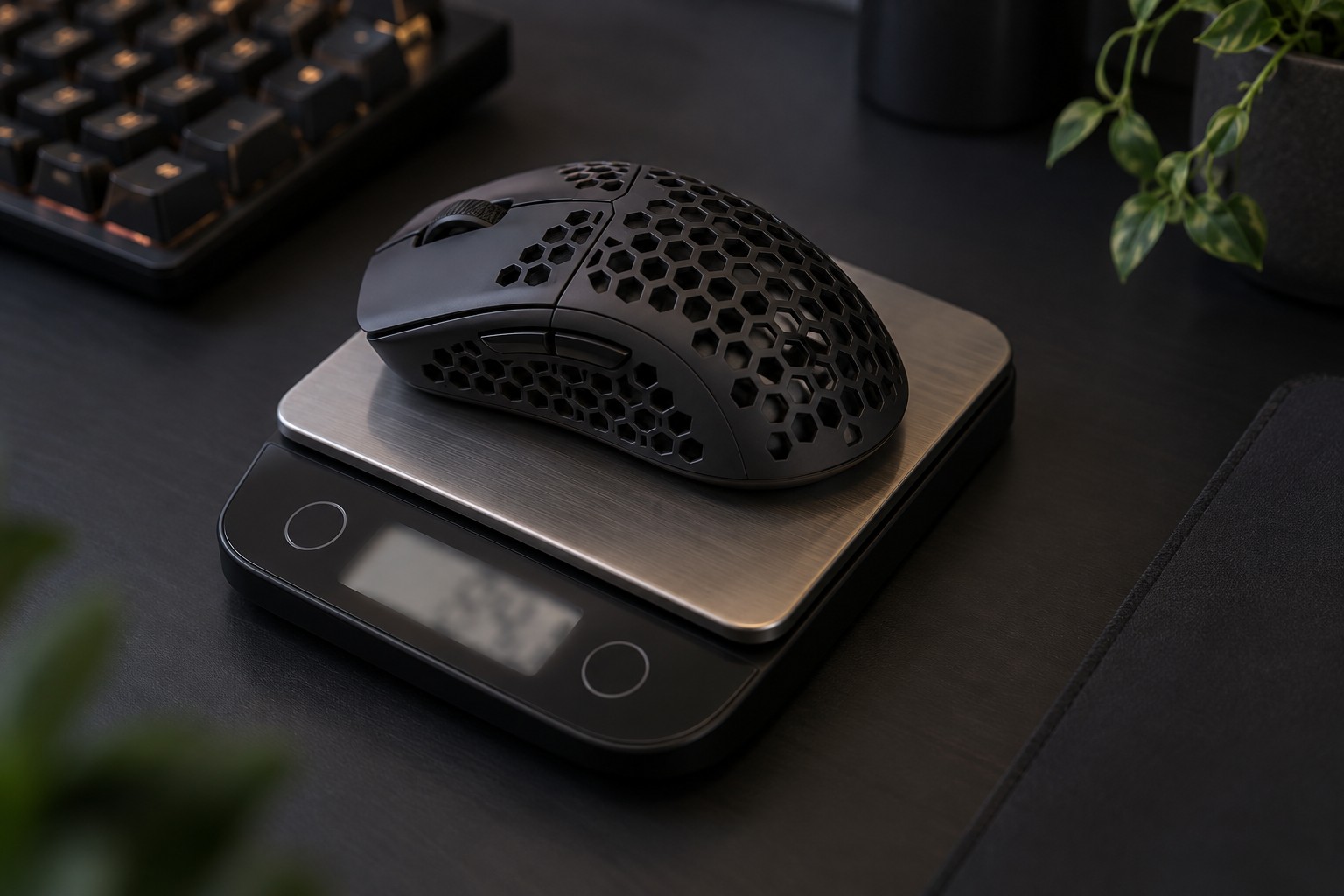
Separate weight from the rest of the setup
A mouse that feels difficult to move may be heavy, but it may also have worn feet, a dragging cable or a pad that creates more resistance than expected. Inspect those conditions before deciding that weight is the main problem. A replacement with fewer grams will not necessarily fix a cable snagging against the monitor stand.
If you compare two mice, keep the pad and sensitivity similar. A much faster pointer can make a heavier mouse seem easier to move simply because your hand travels a shorter distance. Conversely, lowering sensitivity may expose the effort of repeated lifts. Change one factor at a time so that the comparison describes the mouse rather than a completely different control setup.
Consider where the weight sits
The total figure does not show the balance of a device. A battery at the rear, a detachable weight or a cable pulling from the front can influence how it behaves when lifted. Pick up a candidate in your ordinary grip and notice whether it tips. You should not need to squeeze a narrow section unusually hard just to keep the front or rear from dropping.
Read what is included in a published weight. A wireless specification may exclude a removable battery, while a wired specification may exclude the cable. Compare like with like. If a mouse accepts different battery sizes through an approved adapter, include the actual arrangement you plan to use rather than assuming the smallest number describes every configuration.
For a player making broad low-sensitivity movements, repeated repositioning may make weight especially noticeable. Someone who mostly uses small movements in management games might care more about a stable wheel and reachable buttons. These are examples of different priorities, not boundaries between which games a mouse can handle.
Evaluate control rather than a number
During a trial, include both a broad sweep and a small correction. See whether you overshoot because the new mouse moves more freely than expected, then allow some ordinary use before judging. Familiarity can affect the first impression, but a trial should not become a reason to ignore a shape that makes you hold the mouse awkwardly.
Adjustable weights can help with comparison when the model provides them, although they also add parts to keep track of. Follow the manufacturer's arrangement and secure the cover properly. Avoid improvised weights inside a mouse: they can interfere with components and do not offer a controlled way to assess balance.
Choose a weight range that feels manageable with your grip, pad and typical movement. Record the complete model and configuration when comparing candidates. A few grams on a specification sheet are less informative than whether the mouse remains easy to lift and place throughout an ordinary session.