Choose for the room first
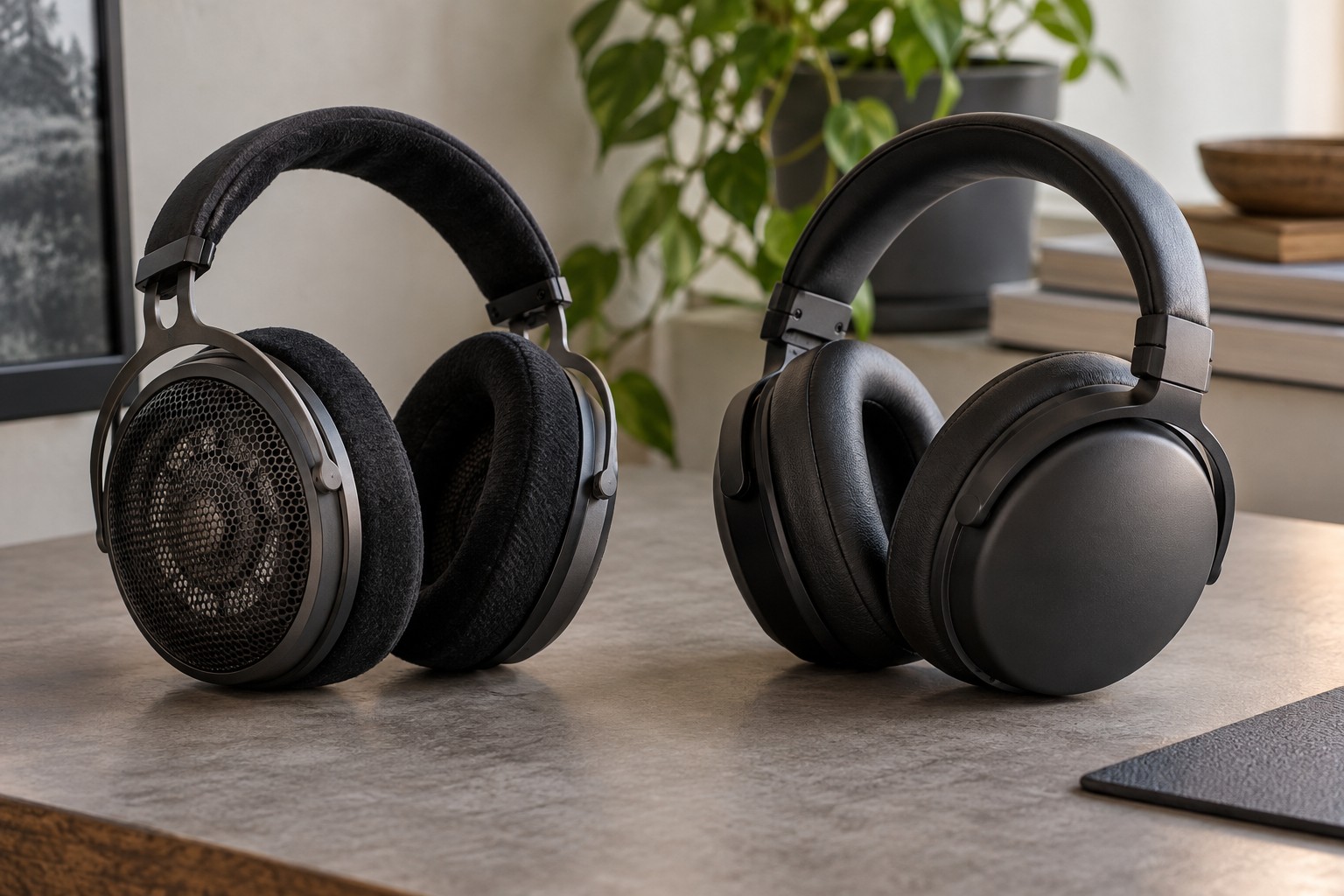
Open-back headphones allow more interaction between the driver area and the surrounding room. They generally let you hear more outside sound and let more of your audio escape. Closed-back designs enclose the rear of the driver, but the amount of isolation still depends on the pads, seal and construction. Neither label guarantees a specific level of noise reduction.
If someone is working or sleeping nearby, consider what they will hear from your normal listening position. If the room has a loud fan or conversation, consider what you will hear through the headphones. A quiet private desk and a shared living room are different environments even when the same games are played in both.
Do not confuse openness with a game feature
Descriptions such as wide or spacious are listening impressions, not proof that a particular headphone will locate every game sound more accurately. The game's audio mix, output settings and your own perception also matter. Compare familiar scenes at similar volume rather than buying solely from a claim that one design is always better for competitive play.
Check the fit during that comparison. A closed cup with a poor seal around glasses can behave differently from the same cup with a close fit. An open design can still press uncomfortably or leave too little room around the ears. The back construction does not settle the comfort question.
If you use a separate microphone, test whether headphone leakage reaches it at your ordinary volume and placement. Do not simply raise the headphone level to overcome room noise. A different room arrangement or a more suitable isolation choice may address the cause more directly.
Compare the complete connection arrangement
Some headphones need a separate microphone for chat, while a headset includes one. Check the connector, cable length and output requirements of the exact model with the computer or controller you plan to use. The open or closed design does not tell you whether a device can drive it to an appropriate level or whether its cable carries a microphone signal.
Use a returnable trial where possible and include both game audio and spoken conversation. Listen long enough to notice fit and leakage, but take breaks rather than treating endurance as a product test. Keep the volume comparable between candidates so that a louder example does not seem better merely because it is louder.
Choose open-back when its room interaction fits your situation, and closed-back when its particular isolation and leakage behavior suits the space better. The useful choice is specific to the room and model, not a permanent ranking of the two categories.