Choose for the listening situation
A wide dynamic range can preserve a strong contrast between quiet moments and loud events. A reduced range can make quieter details more audible without requiring the same increase in overall volume. Games may call these choices home theater, night mode, headphones or something else, but those labels are not standardized. Read the description rather than assuming every headphone preset performs the same processing.
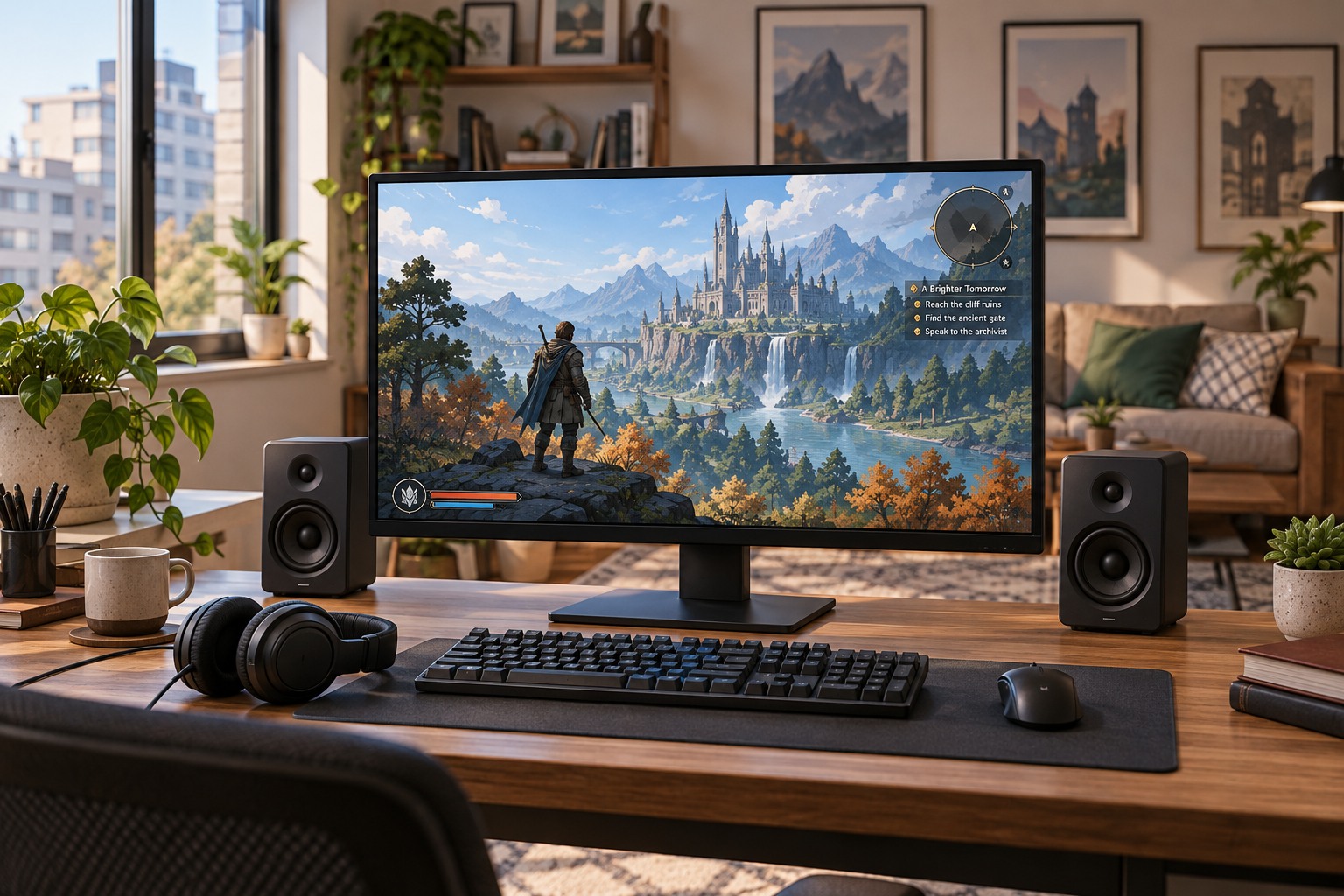
Think about who else uses the room. A late session beside a sleeping household member has different requirements from a dedicated room with speakers. Start at a comfortable moderate volume and compare a scene containing both conversation and action. Do not judge only an explosion or only a quiet menu; the relationship between sounds is the point of the setting.
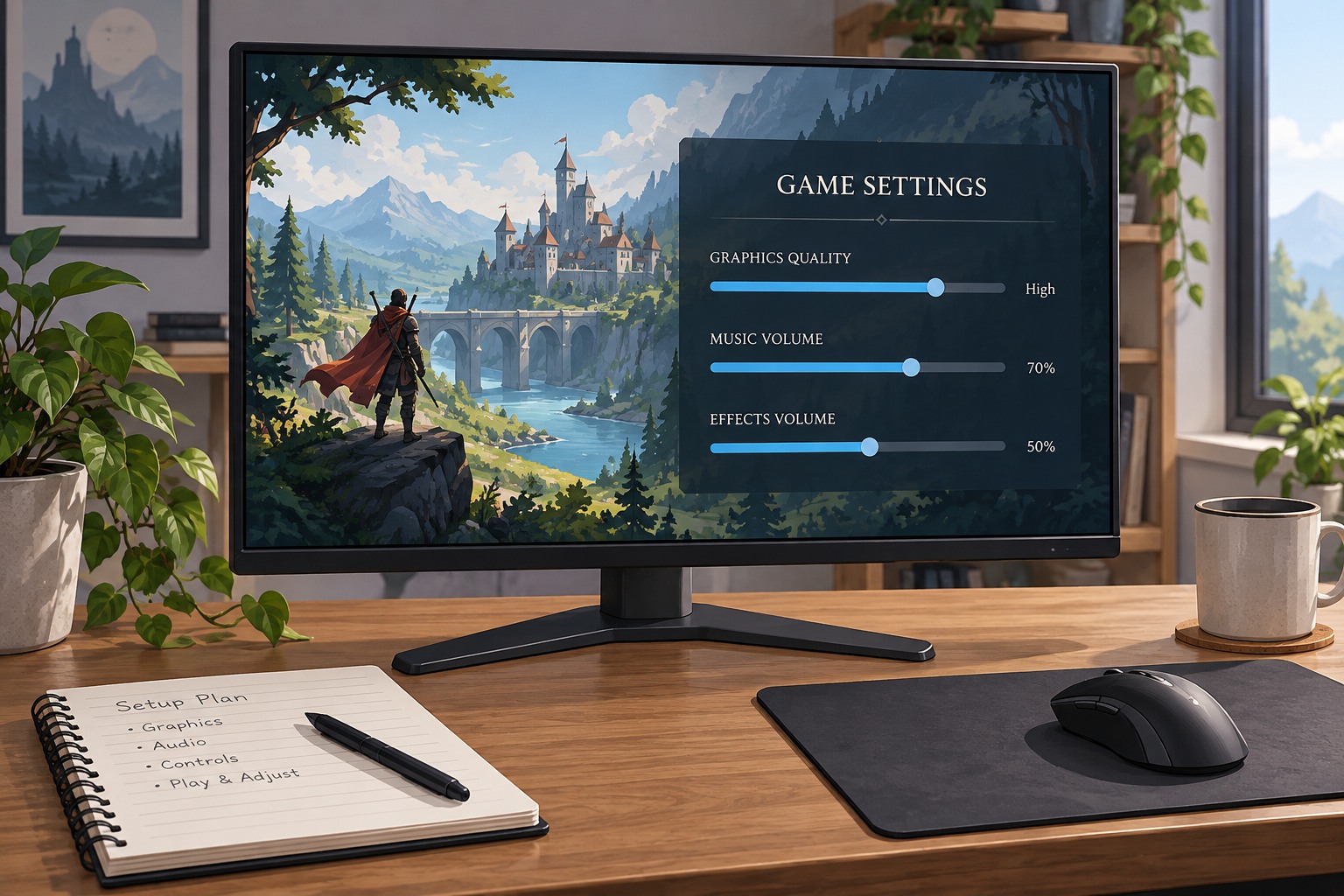
If dialogue remains hard to understand, look for a separate dialogue-level control before raising the master volume. Music and effects can sometimes be adjusted independently. Change one control at a time so you can hear what it does. A narrower dynamic range and a louder dialogue channel are different adjustments, even though both may help with the same scene.
Avoid stacking unexplained processing
The game, operating system, headset software and television can each offer sound processing. If several loudness or night modes are active together, the result may sound unexpectedly compressed or change balance. Start with a simple known configuration, then enable only the processing that serves a clear purpose. Keep the same output device during the comparison.
Listen for whether important cues remain distinct and whether the overall sound becomes tiring or unnatural to you. A setting intended to help quiet listening should not become a reason to turn everything louder. Test voice chat separately, since it may bypass the game's dynamic-range processing or use another volume control. A comfortable game mix can still be overwhelmed by an unusually loud teammate.
Save the preferred mode for that listening arrangement. If you move from speakers to a headset, revisit the choice rather than assuming the old label still matches. Use the setting to make the session suitable for your room and equipment, not to reproduce another player's volume numbers, which do not describe the actual sound level at your ears.