Find an edge that reveals the difference
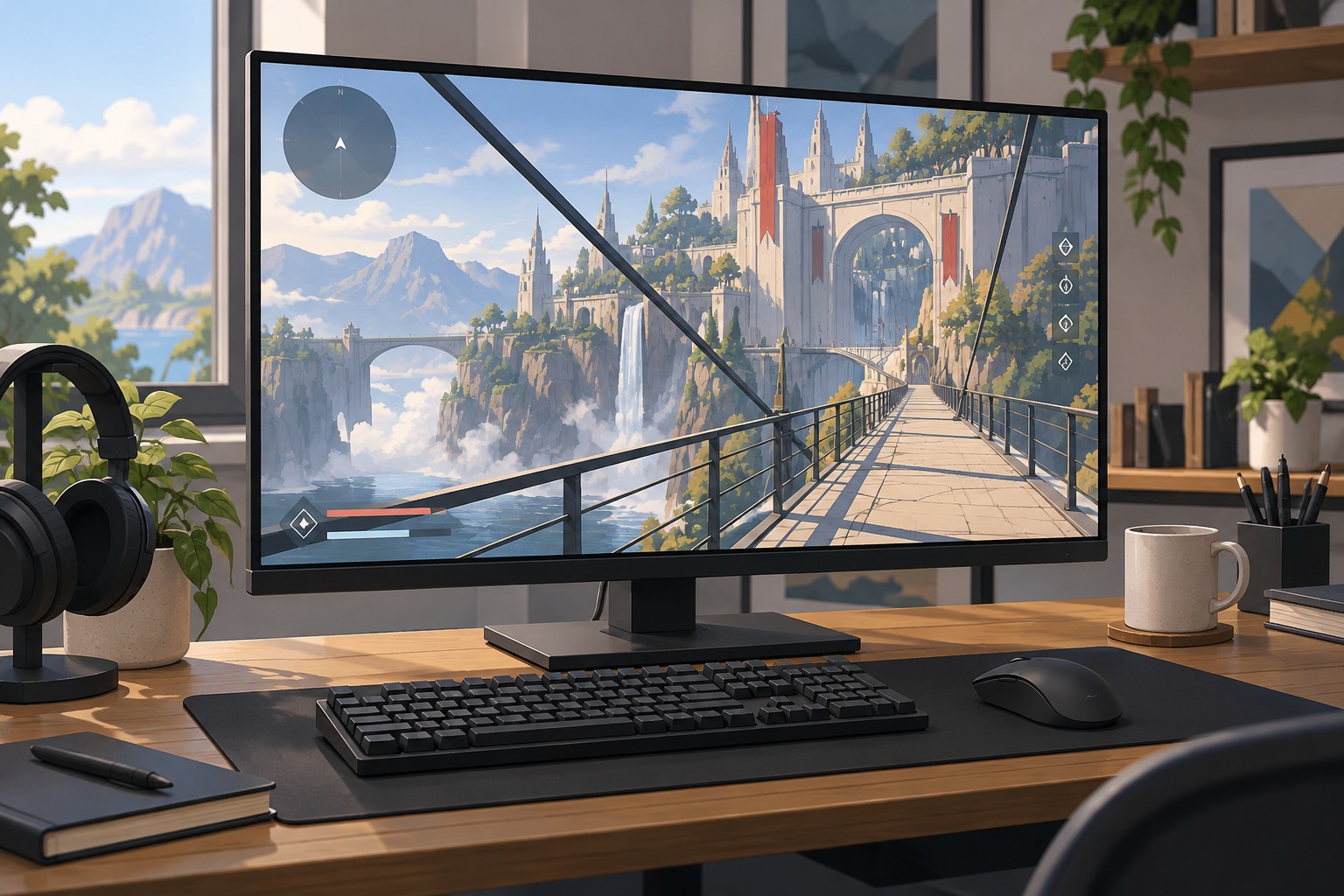
Thin railings, power lines, distant branches and diagonal building edges are useful comparison subjects. Look first with the camera still, then move slowly past them. Stair-step shapes in a still view and shimmering during motion are related visual problems, but a method that improves one may not resolve the other equally well. Use a familiar scene rather than judging from a menu thumbnail.
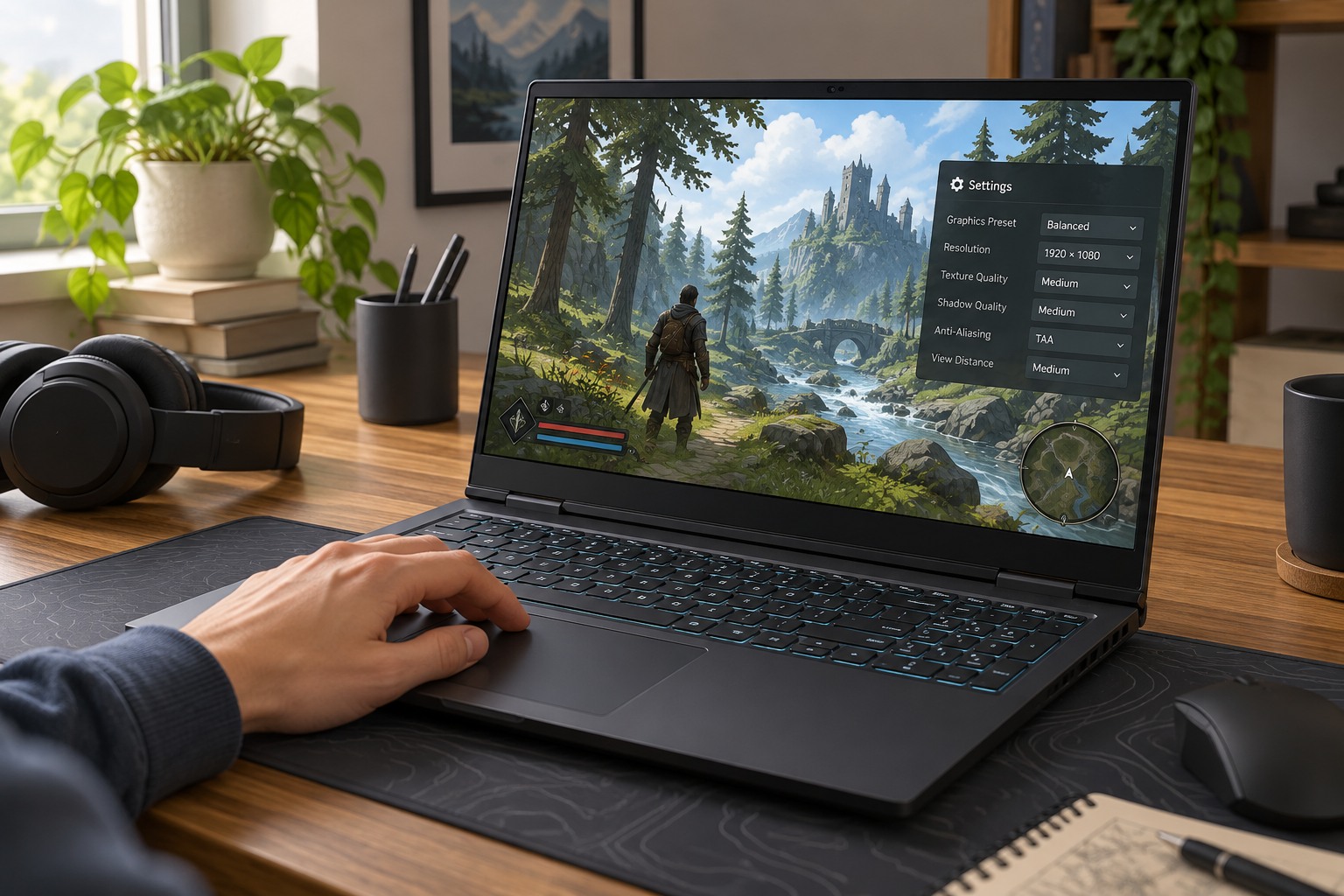
Keep the output resolution and any resolution-scaling settings unchanged while comparing anti-aliasing. Reducing internal resolution at the same time can make the image softer for a separate reason. Some games integrate anti-aliasing into an upscaling or reconstruction mode, so the controls may not be independently selectable. Read the menu explanation before assuming that a grayed-out option is a fault.
Compare softness with stability
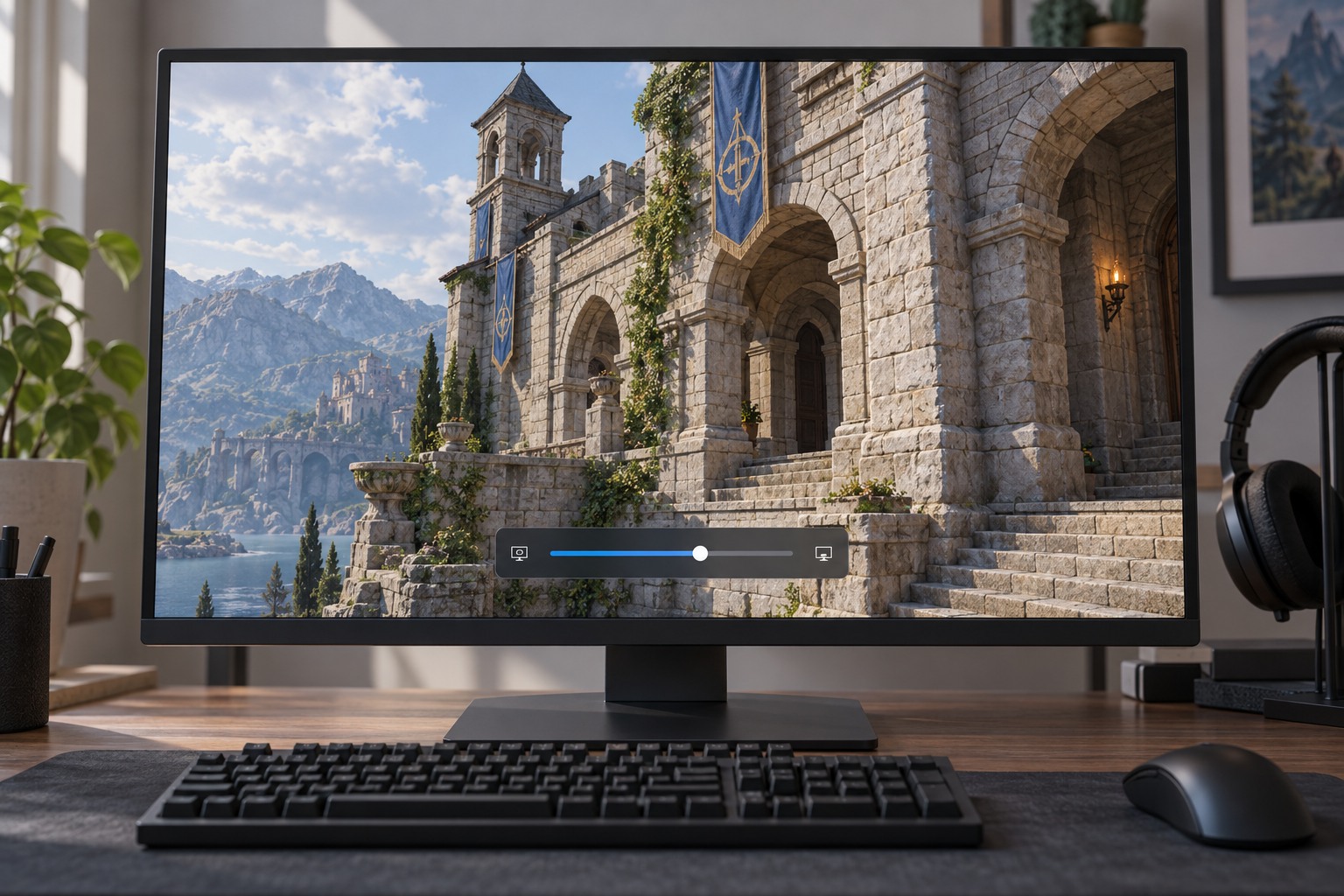
A smoother edge can come with a softer overall image. Examine texture detail and text that is part of the game world, then check whether the change remains noticeable at your normal viewing distance. Avoid increasing every sharpening slider immediately. Strong sharpening can emphasize outlines and noise without restoring information that was never rendered.
Methods that use information from earlier frames can behave differently during movement, around objects that become visible or near particles. Look for trails or unstable fine detail in ordinary play. The implementation matters as much as the method's name, so an option you disliked in one game may be acceptable in another. There is no useful universal ranking that ignores resolution and the rest of the rendering setup.
Keep the comparison small
Try the available options in a repeatable order and record a short note for each: cleaner wires, softer foliage, distracting trails or no visible benefit. Include performance only after the visual comparison is clear. If an option substantially affects frame delivery, repeat the same route to see whether the difference is consistent rather than relying on one brief counter reading.
Choose the setting whose compromises are least distracting in the games you play. A distant shimmering fence can matter more than slightly softer static textures, while another player may prefer the reverse. Once selected, play a longer session before changing it again. If you later alter output resolution or enable a different upscaler, revisit the edge comparison because the earlier conclusion may no longer apply.